Mounjaro® Side Effects UK — What to Expect and How to Manage Them
Mounjaro® (tirzepatide) is currently one of the most prescribed weight loss medications in the UK private sector. If you’re considering it — or already taking it and experiencing side effects — this guide covers everything you need to know, based on the SURMOUNT-1 clinical trial data published in the New England Journal of Medicine (2022).
Mounjaro® Side Effects — How Common Are They?
| Side Effect |
Frequency (15mg dose) |
Frequency (2.5mg starting dose) |
| Nausea |
44% |
12% |
| Diarrhoea |
30% |
14% |
| Decreased appetite |
25% |
10% |
| Vomiting |
22% |
6% |
| Constipation |
17% |
10% |
| Abdominal pain |
10% |
6% |
| Injection site reaction |
5% |
4% |
| Dyspepsia |
9% |
4% |
How to Manage the Most Common Mounjaro® Side Effects
Nausea (most common)
- Eat smaller, more frequent meals — avoid large portions
- Avoid high-fat, greasy or spicy food, especially on injection day
- Inject at bedtime to sleep through peak effect
- Stay hydrated — dehydration worsens nausea
- If severe after dose increase, return to previous dose for an extra 4 weeks
Diarrhoea
- Increase fluid intake to prevent dehydration
- Temporarily reduce fibre intake
- Avoid alcohol — it significantly worsens GI side effects
- OTC loperamide (Imodium) can provide relief for acute episodes
Constipation
- Increase water intake to at least 2.5 litres daily
- Increase dietary fibre gradually
- Light exercise (walking) stimulates bowel motility
- Osmotic laxatives (Movicol) can help if needed
Serious Mounjaro® Side Effects — When to Stop and Seek Help
- Severe, persistent abdominal pain (may indicate pancreatitis — stop immediately, seek emergency care)
- Significant vision changes (diabetic retinopathy risk with rapid glucose changes)
- Persistent vomiting preventing adequate fluid intake (dehydration)
- Symptoms of gallbladder disease — upper right abdominal pain, nausea, fever
- Allergic reaction — rash, facial swelling, difficulty breathing
Mounjaro® carries a black box warning regarding thyroid C-cell tumours based on rodent studies. It is contraindicated in patients with personal or family history of medullary thyroid carcinoma or MEN 2. See the full FDA prescribing information: Mounjaro® NDA 215866 →
Mounjaro® Is Too Expensive — What Are the Alternatives?
Mounjaro® costs £1,050–£1,400/month on private prescription in the UK. For many patients, this is simply not sustainable long-term. The good news: the identical active molecule (tirzepatide) is available as a compounded alternative at significantly lower cost.
Compounded Tirzepatide UK — Same Molecule, 80% Less
Our compounded tirzepatide uses the same dual GLP-1/GIP active ingredient as Mounjaro® — compounded to ≥98% purity at a PCAB-accredited pharmacy. Every order includes physician review, personalised dosing protocol and 48hr UK delivery:
Or Consider Retatrutide — Even Stronger Results
If you’re already considering tirzepatide, retatrutide UK is worth considering — it’s the next step up in efficacy (24.2% vs 22.5% weight loss) for £100/month more than our tirzepatide options. Many buyers who have tried Mounjaro® find retatrutide produces noticeably stronger results.
Questions?
Retatrutide Side Effects UK — What the Phase 2 Clinical Trial Data Shows
Understanding retatrutide side effects before you start is essential for safe and effective use. The good news: the side effect profile from Phase 2 trials is well-characterised, dose-dependent and largely manageable with proper titration. This guide covers every side effect reported in the NEJM Phase 2 trial, how common each is, and exactly what to do if you experience them.
The Most Common Retatrutide Side Effects (GI-Related)
Like all GLP-1 class peptides, the most common retatrutide side effects are gastrointestinal. They occur because GLP-1 receptors are present throughout the gut, and receptor activation slows gastric motility. The key facts:
- All GI side effects are dose-dependent — they increase with higher doses
- All GI side effects are typically transient — they reduce significantly after 4–6 weeks at a stable dose
- All GI side effects can be dramatically reduced with slow titration as per your physician protocol
Retatrutide Side Effects — Phase 2 Trial Frequency Data
| Side Effect |
Frequency (24mg dose) |
Frequency (2mg dose) |
Severity |
| Nausea |
48% |
18% |
Mild–Moderate |
| Diarrhoea |
32% |
14% |
Mild |
| Vomiting |
22% |
8% |
Mild–Moderate |
| Constipation |
21% |
12% |
Mild |
| Decreased appetite |
16% |
8% |
Mild (desired effect) |
| Abdominal pain |
12% |
6% |
Mild |
| Injection site reaction |
8% |
6% |
Mild, local |
| Heart rate increase |
9% |
3% |
Mild, transient |
| Fatigue |
7% |
4% |
Mild |
Source: Jastreboff AM et al., NEJM 2023
How to Manage Retatrutide Nausea
Nausea is the most common retatrutide side effect and the most frequently cited reason for dose reduction or discontinuation in the trial. Here’s how to manage it effectively:
- Eat smaller meals: Retatrutide slows gastric emptying — large meals sit in the stomach longer and cause nausea. Eat 50–60% of your normal portion size
- Avoid high-fat, high-calorie meals on injection day and the day after — these are most likely to trigger nausea
- Time your injection: Many users find injecting at bedtime minimises nausea by sleeping through the peak effect period
- Stay hydrated: Dehydration worsens nausea — drink 2–3 litres of water daily
- Don’t lie down immediately after eating: Stay upright for at least 2 hours after meals
- Slow your titration: If nausea persists beyond week 3 at a new dose, do not escalate — wait until nausea resolves before increasing
Heart Rate Increase — The Glucagon Effect
Retatrutide’s glucagon (GCG) receptor activation produces a modest heart rate increase not typically seen with semaglutide or tirzepatide. In the Phase 2 trial, mean heart rate increased by approximately 4–6 beats per minute. This is generally well-tolerated in healthy adults but warrants monitoring in patients with pre-existing cardiovascular conditions.
If you notice palpitations or a significant heart rate increase at higher retatrutide doses, contact your physician. Do not increase your dose until this has been evaluated.
Retatrutide Side Effects vs Semaglutide and Tirzepatide
| Side Effect |
Retatrutide |
Tirzepatide |
Semaglutide |
| Nausea (any grade) |
48% |
44% |
44% |
| Diarrhoea |
32% |
30% |
30% |
| Vomiting |
22% |
22% |
24% |
| Heart rate increase |
Yes (glucagon) |
Mild |
Mild |
| Fatigue |
7% |
8% |
11% |
The GI side effect profiles are broadly similar across the GLP-1 class. Retatrutide’s unique addition is the modest heart rate increase from glucagon receptor activation.
Rare but Serious Side Effects — When to Seek Help
While uncommon, the following require immediate medical attention:
- Severe abdominal pain radiating to the back (may indicate pancreatitis — discontinue immediately)
- Significant palpitations or chest discomfort persisting beyond 24 hours
- Severe allergic reaction — rash, swelling, difficulty breathing (anaphylaxis — extremely rare)
- Severe, persistent vomiting preventing fluid intake (dehydration risk)
- Symptoms of gallbladder disease — GLP-1 class peptides increase gallstone risk with rapid weight loss
Retatrutide and Thyroid Risk — What You Need to Know
GLP-1 receptor agonists caused thyroid C-cell tumours in rodent studies. The clinical significance in humans is unknown. Retatrutide is contraindicated in individuals with personal or family history of medullary thyroid carcinoma (MTC) or Multiple Endocrine Neoplasia type 2 (MEN 2). If you have any thyroid history, consult your physician before starting retatrutide.
Ready to Start Retatrutide Safely?
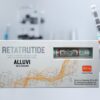
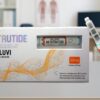
Buy Synedica Retatrutide 40mg UK or Alluvi Retatrutide 40mg UK from £299/month — every order includes a physician-reviewed titration protocol designed to minimise side effects. Have questions?
Related: Retatrutide dosage guide · How retatrutide works · Retatrutide results